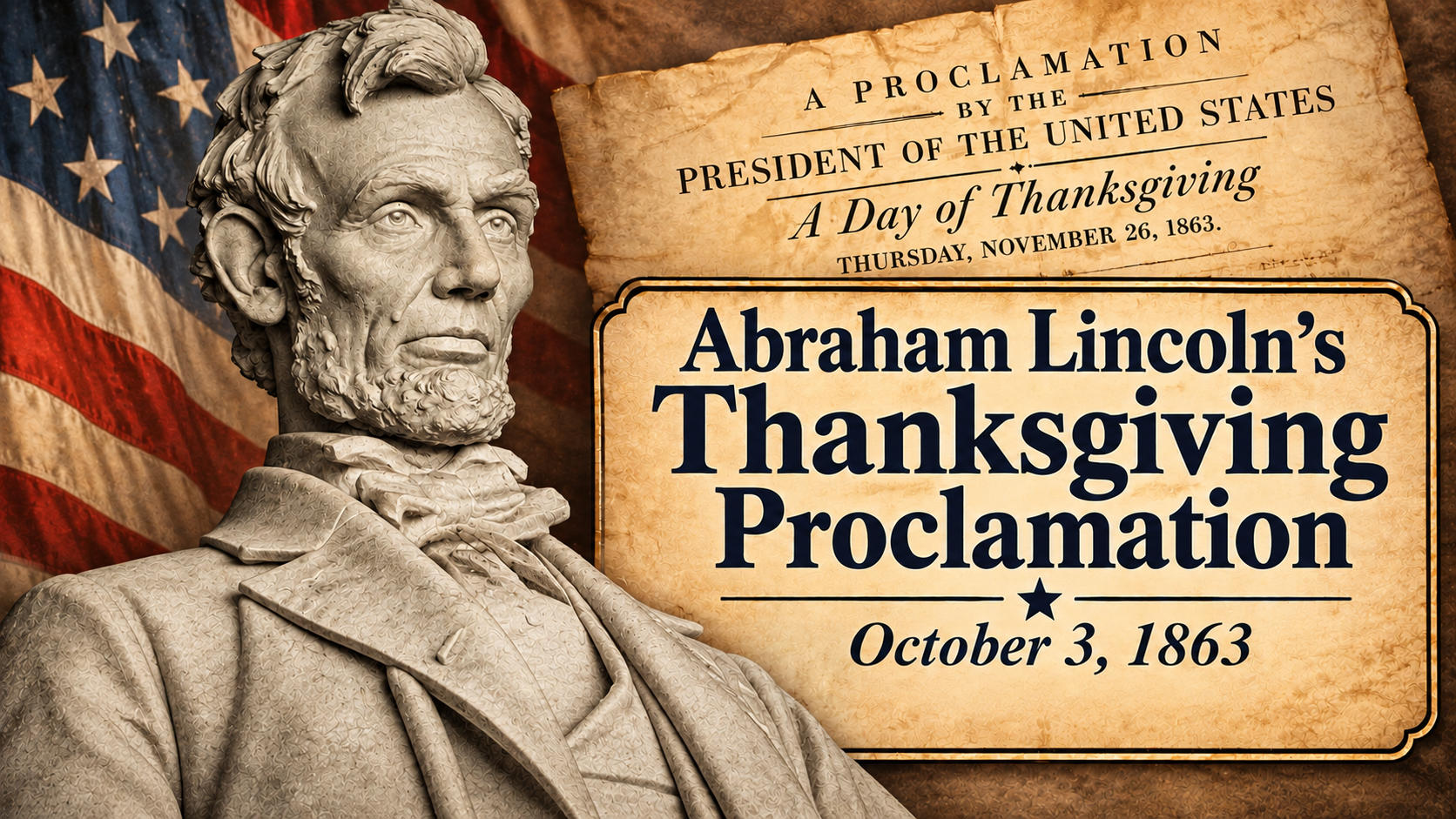
Abraham Lincoln’s Thanksgiving Proclamation
October 3, 1863
By the President of the United States of America.
A Proclamation.
The year that is drawing towards its close, has been filled with the blessings of fruitful fields and healthful skies. To these bounties, which are so constantly enjoyed that we are prone to forget the source from which they come. others have been added, which are of so extraordinary a nature, that they cannot fail to penetrate and soften even the heart which is habitually insensible to the ever watchful providence of Almighty God.
In the midst of a civil war of unequalled magnitude and severity, which has sometimes seemed to foreign States to invite and to provoke their aggression, peace has been preserved with all nations, order has been maintained, the laws have been respected and obeyed, and harmony has prevailed everywhere except in the theatre of military conflict; while that theatre has been greatly contracted by the advancing armies and navies of the Union. Needful diversions of wealth and of strength from the fields of peaceful industry to the national defence, have not arrested the plough, the shuttle or the ship; the axe has enlarged the borders of our settlements, and the mines, as well of iron and coal as of the precious metals, have yielded even more abundantly than heretofore. Population has steadily increased, notwithstanding the waste that has been made in the camp, the siege and the battle-field; and the country, rejoicing in the consciousness of augmented strength and vigor, is permitted to expect continuance of years with large increase of freedom.
No human counsel hath devised nor hath any mortal hand worked out these great things. They are the gracious gifts of the Most High God, who, while dealing with us in anger for our sins, hath nevertheless remembered mercy. It has seemed to me fit and proper that they should be solemnly, reverently and gratefully acknowledged as with one heart and one voice by the whole American People.
I do therefore invite my fellow citizens in every part of the United States, and also those who are at sea and those who are sojourning in foreign lands, to set apart and observe the last Thursday of November next, as a day of Thanksgiving and Praise to our beneficent Father who dwelleth in the Heavens. And I recommend to them that while offering up the ascriptions justly due to Him for such singular deliverances and blessings, they do also, with humble penitence for our national perverseness and disobedience, commend to His tender care all those who have become widows, orphans, mourners or sufferers in the lamentable civil strife in which we are unavoidably engaged, and fervently implore the interposition of the Almighty Hand to heal the wounds of the nation and to restore it as soon as may be consistent with the Divine purposes to the full enjoyment of peace, harmony, tranquillity and Union.
In testimony whereof, I have hereunto set my hand and caused the Seal of the United States to be affixed.
Done at the City of Washington, this Third day of October, in the year of our Lord one thousand eight hundred and sixty-three, and of the Independence of the United States the Eighty-eighth.
By the President: Abraham Lincoln
William H. Seward,
Secretary of State
Five Things You May Not Know About Lincoln’s Thanksgiving Proclamation
1. Lincoln did not invent Thanksgiving, but he helped create the national tradition we know today.
Days of thanksgiving had been observed in America long before 1863, including earlier national proclamations by presidents such as George Washington. Lincoln’s October 3, 1863 proclamation established a national observance on the last Thursday of November, helping unite the country around a common day of gratitude. The holiday was later fixed as the fourth Thursday of November by federal law in 1941.
2. A determined magazine editor helped inspire Lincoln’s proclamation.
Sarah Josepha Hale, editor of Godey’s Lady’s Book and author of the nursery rhyme “Mary Had a Little Lamb” spent years encouraging American leaders to establish a national Thanksgiving observance. Her campaign helped bring the idea to Lincoln’s attention during the Civil War.
3. Lincoln called for Thanksgiving during one of the Civil War’s most pivotal years.
The proclamation came just months after major Union victories at Gettysburg and Vicksburg.
4. The “better angels” of Lincoln’s First Inaugural Address connect closely with his Thanksgiving message.
In 1861, Lincoln appealed to the “better angels of our nature,” hoping that shared memories and affection for the Union could prevent division. Two years later, his Thanksgiving Proclamation again called Americans toward humility, gratitude, and reflection during a national crisis.
5. The first Thanksgiving under Lincoln’s proclamation was observed on November 26, 1863.
Communities across the Union marked the day with worship services, gatherings, and expressions of gratitude.